Introduction to Artificial Zoo
The way people experience wildlife is changing rapidly. For many years, traditional zoos have been one of the most common places where families, students, and tourists could observe animals and learn about nature. However, technological advancements have introduced a new concept known as the Artificial Zoo.
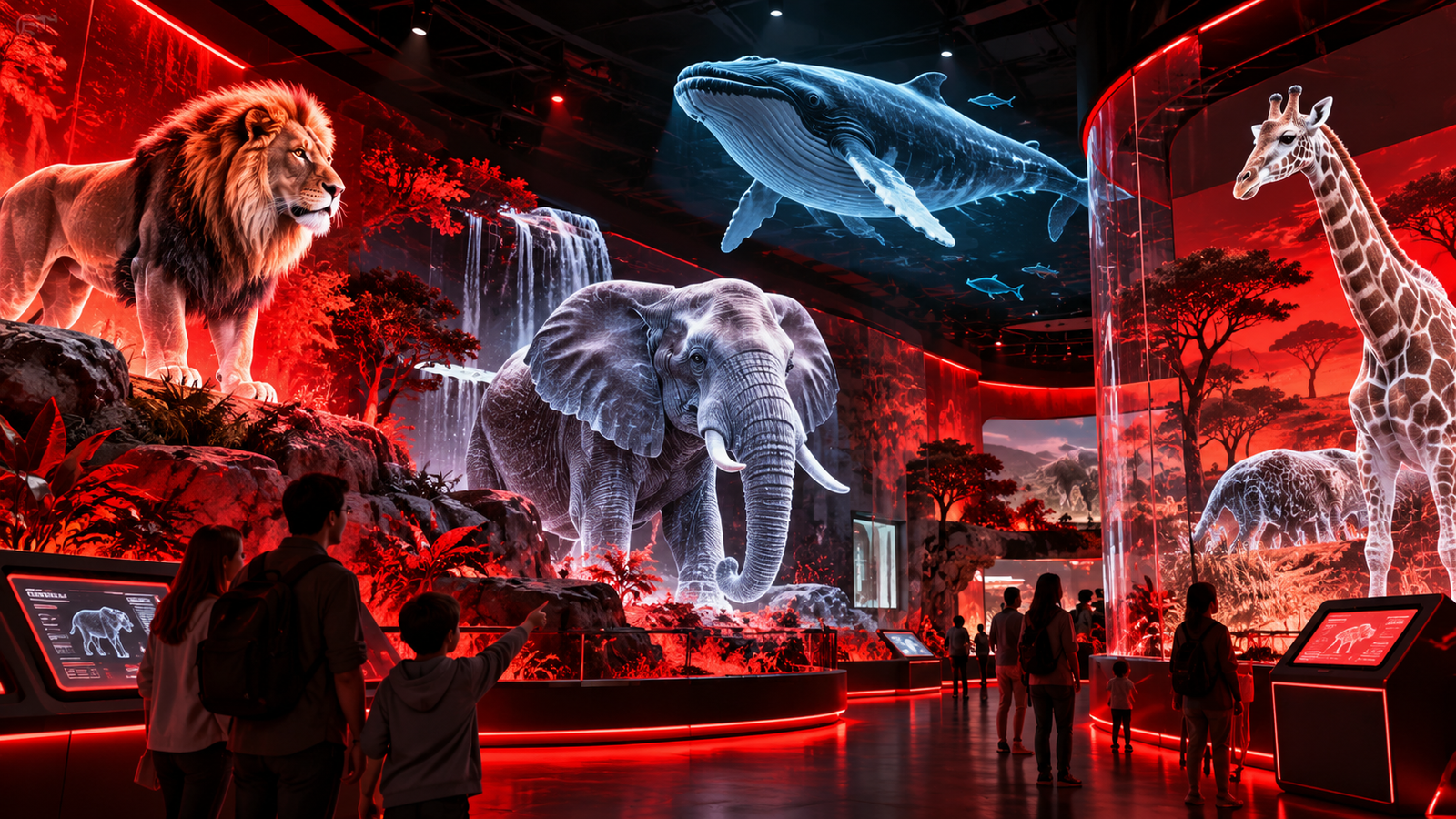
An Artificial Zoo uses modern technologies such as holograms, virtual reality (VR), augmented reality (AR), artificial intelligence (AI), and interactive digital displays to recreate wildlife experiences without relying on live animals. Instead of seeing animals in physical enclosures, visitors can interact with realistic digital animals that move, behave, and respond in ways that closely resemble their real-life counterparts.
As concerns about animal welfare, conservation, and sustainability continue to grow, the Artificial Zoo concept is attracting attention worldwide. Many experts view it as a potential complement to traditional wildlife attractions while offering new educational opportunities.
What Is an Artificial Zoo?
An Artificial Zoo is a technology-driven attraction that recreates animals and natural habitats through digital, virtual, or robotic systems rather than housing live animals. Visitors can observe life-sized animal projections, explore virtual ecosystems, and engage with interactive exhibits designed to simulate real wildlife encounters.
Unlike traditional zoos, where animals are physically present, an Artificial Zoo creates experiences using advanced visualization technologies. A visitor may see a digital elephant walking through a projected savanna, a virtual whale swimming overhead, or a holographic dinosaur roaming a prehistoric landscape.
The primary goals of an Artificial Zoo include:
- Wildlife education
- Conservation awareness
- Animal welfare improvement
- Technological innovation
- Interactive learning experiences
The concept aims to provide the excitement of wildlife exploration while reducing concerns associated with keeping animals in captivity.
The History and Evolution of Artificial Zoo Concepts
The idea of digitally representing animals is not entirely new. Museums, science centers, and educational institutions have used models, animations, and digital displays for decades. However, the development of immersive technologies has transformed these basic exhibits into highly realistic wildlife experiences.
Initially, digital animal exhibitions relied on simple video presentations and computer-generated animations. As technology improved, augmented reality and virtual reality made it possible for visitors to interact with animals in three-dimensional environments.
Recent research examining hologram-based wildlife attractions shows that virtual animal encounters are increasingly being explored as alternatives or complements to traditional wildlife tourism experiences. These attractions aim to educate visitors while minimizing the environmental and welfare concerns associated with some forms of wildlife tourism.
Today, Artificial Zoo experiences can include holographic tunnels, motion-sensitive exhibits, immersive projection rooms, AI-powered interactions, and realistic wildlife simulations.
How an Artificial Zoo Works
An Artificial Zoo combines several advanced technologies to create immersive wildlife experiences.
Holographic Projection
Holographic systems project three-dimensional animal images that appear to move naturally through physical spaces. Visitors often feel as though the animals are present even though they are entirely digital.
Virtual Reality (VR)
VR headsets transport visitors into fully digital ecosystems. A person can explore a rainforest, dive into an ocean habitat, or walk among prehistoric creatures from anywhere in the world.
Augmented Reality (AR)
AR technology overlays digital animals onto real-world surroundings. Visitors can use smartphones, tablets, or AR glasses to view virtual animals interacting with their environment.
Artificial Intelligence
AI helps simulate realistic animal behaviors. Digital animals can react to movement, sounds, and visitor interactions, creating more engaging experiences.
Motion Tracking
Motion sensors monitor visitor movements and trigger specific animal responses, making interactions feel more natural and personalized.
Environmental Effects
Some Artificial Zoo attractions include sounds, wind, vibrations, lighting changes, and scent effects to increase immersion and create realistic habitat simulations.
Key Features of an Artificial Zoo
Artificial Zoo attractions often include a wide range of innovative features designed to enhance visitor engagement.
Some common features include:
- Life-sized digital animals
- Interactive learning experiences
- Immersive habitat simulations
- Educational conservation programs
- Indoor climate-controlled environments
- Safe and accessible visitor experiences
- Customizable exhibits for different age groups
These features help create memorable experiences while encouraging curiosity about wildlife and environmental conservation.
Artificial Zoo vs Traditional Zoo
Although both concepts aim to educate and entertain visitors, they operate in very different ways.
| Feature | Artificial Zoo | Traditional Zoo |
|---|---|---|
| Live Animals | No | Yes |
| Animal Welfare Concerns | Minimal | Can Exist |
| Technology Usage | Very High | Moderate |
| Visitor Interaction | Digital & Interactive | Observation-Based |
| Habitat Recreation | Virtual | Physical |
| Environmental Footprint | Potentially Lower | Higher Resource Requirements |
| Educational Methods | Immersive Technology | Live Animal Observation |
| Accessibility | Indoor & Flexible | Location Dependent |
Traditional zoos provide opportunities to observe living animals directly. Artificial Zoos, on the other hand, focus on technological simulations that eliminate the need for animal captivity while still offering educational experiences.
Rather than replacing traditional zoos entirely, many experts believe both approaches can coexist and serve different educational purposes.
Benefits of Artificial Zoo
One of the most significant advantages of an Artificial Zoo is the elimination of concerns related to housing live animals. Since no animals are confined to exhibits, issues involving habitat restrictions, transportation stress, and captive care requirements are greatly reduced.
Another major benefit is educational flexibility. Artificial Zoo exhibits can display animals from different continents, deep oceans, extinct species, and even future ecological scenarios that would be impossible to showcase in a traditional zoo.
Additional benefits include:
- Enhanced visitor engagement through technology.
- Interactive learning opportunities.
- Increased accessibility for schools and families.
- Reduced risks associated with live animal exhibits.
- Opportunities to showcase extinct or endangered species.
- Easier adaptation of exhibits for changing educational needs.
These advantages make Artificial Zoo attractions particularly attractive for urban educational centers and museums.
Challenges and Limitations of Artificial Zoo
Despite its benefits, the Artificial Zoo model also faces several challenges.
The most obvious limitation is the absence of real animals. Many visitors value the emotional connection that comes from observing living wildlife. Digital representations, regardless of realism, may not fully replicate that experience.
Technology costs can also be substantial. Developing high-quality holograms, virtual reality systems, and interactive displays requires significant investment.
Other challenges include:
- Equipment maintenance costs
- Technical failures
- Continuous software updates
- Visitor adaptation to new experiences
- Balancing entertainment and education
Research on holographic wildlife attractions has also suggested that conservation messaging and educational content should remain a priority to maximize the value of these experiences.
The Role of Artificial Zoo in Education
Education is one of the strongest arguments in favor of the Artificial Zoo concept.
Modern learners often engage more effectively with interactive content than traditional displays. By combining storytelling, visual effects, simulations, and real-time interactions, Artificial Zoos can make complex wildlife topics easier to understand.
Students can learn about:
- Animal adaptations
- Ecosystems
- Biodiversity
- Climate change
- Endangered species
- Habitat conservation
Educational institutions may also use Artificial Zoo experiences to support science, geography, environmental studies, and biology curricula.
Studies on AR-based zoo applications indicate that immersive technologies can improve engagement and increase awareness of conservation-related topics among visitors.
Artificial Zoo and Wildlife Conservation
Conservation awareness is a major objective of many Artificial Zoo projects.
By showcasing endangered species and highlighting environmental challenges, Artificial Zoos can encourage visitors to think about conservation issues without requiring animals to be displayed in captivity.
Conservation-related benefits may include:
- Raising awareness about endangered species
- Supporting environmental education
- Promoting sustainable tourism concepts
- Encouraging responsible wildlife interactions
- Reaching larger audiences through digital experiences
Research into virtual wildlife attractions suggests that these experiences have the potential to support conservation education while reducing certain impacts associated with wildlife tourism.
Technologies Powering Artificial Zoo Experiences
The success of an Artificial Zoo depends heavily on technology.
Artificial Intelligence (AI)
AI enables realistic animal behaviors and interactive experiences.
Virtual Reality (VR)
VR creates fully immersive wildlife adventures.
Augmented Reality (AR)
AR allows digital animals to appear within real environments.
Mixed Reality (MR)
MR blends virtual and physical elements into a single interactive experience.
Holographic Displays
These systems create lifelike animal projections visible to visitors.
Interactive Sensors
Motion tracking and touch-sensitive technologies enhance participation.
3D Audio Systems
Surround sound creates realistic environmental atmospheres.
Together, these technologies transform wildlife education into an engaging and memorable experience.
Popular Artificial Zoo Projects Around the World
Several projects around the world demonstrate the growing interest in Artificial Zoo concepts.
Hologram-based wildlife attractions have appeared in Australia, where visitors experience digital animals through immersive augmented reality environments. Researchers studying these attractions have noted their potential as innovative wildlife tourism experiences.
In Pakistan, plans for hologram zoo experiences have also been explored, particularly in Lahore, where authorities discussed using holographic and augmented reality technologies to modernize visitor experiences.
India has also introduced virtual zoo experiences that use projection technologies, motion effects, and immersive simulations to educate visitors about wildlife.
These developments demonstrate the growing global interest in technology-based wildlife education.
Who Can Benefit from an Artificial Zoo?
An Artificial Zoo can serve a wide range of audiences.
Families
Families can enjoy safe, educational, and interactive wildlife experiences.
Schools
Teachers can use exhibits to support classroom learning and field trips.
Tourists
Visitors can explore global wildlife without traveling long distances.
Conservation Organizations
Environmental groups can use Artificial Zoo experiences to promote awareness campaigns.
Researchers
Scientists can test new educational methods and digital engagement strategies.
Technology Enthusiasts
People interested in innovation can experience cutting-edge immersive technologies.
The versatility of Artificial Zoo attractions makes them suitable for numerous educational and recreational purposes.
Future Trends of Artificial Zoo
The future of Artificial Zoo experiences appears promising as technology continues to advance.
Emerging trends may include:
- Hyper-realistic holographic animals
- AI-powered conversations with virtual wildlife
- Personalized educational journeys
- Global virtual conservation networks
- Remote wildlife experiences from home
- Integration with smart city infrastructure
As computing power increases and immersive technologies become more affordable, Artificial Zoo attractions may become increasingly common in museums, educational centers, and entertainment venues worldwide.
Frequently Asked Questions About Artificial Zoo
What is an Artificial Zoo?
An Artificial Zoo is a technology-based wildlife attraction that uses digital animals, holograms, AR, VR, and AI instead of live animals.
How does an Artificial Zoo differ from a traditional zoo?
Traditional zoos display living animals, while Artificial Zoos use digital simulations and immersive technologies.
Are Artificial Zoos better for animal welfare?
Because they do not require animals to be kept in captivity, Artificial Zoos generally eliminate many animal welfare concerns associated with housing wildlife.
What technologies are used in an Artificial Zoo?
Common technologies include holographic projections, virtual reality, augmented reality, artificial intelligence, mixed reality, and motion tracking systems.
Can Artificial Zoos help wildlife conservation?
Yes. They can educate visitors about endangered species, environmental challenges, and conservation efforts while promoting awareness through interactive experiences.
Are Artificial Zoos suitable for children?
Yes. Many Artificial Zoo attractions are designed specifically to provide educational and entertaining experiences for children and families.
Do Artificial Zoos use real animals?
No. Artificial Zoos rely on digital representations rather than live animal exhibits.
What is the future of Artificial Zoo experiences?
Future developments may include more realistic simulations, AI-powered interactions, enhanced educational programs, and wider global adoption.
Conclusion
The Artificial Zoo represents a fascinating blend of technology, education, and conservation. By using holograms, augmented reality, virtual reality, and artificial intelligence, these attractions offer visitors immersive wildlife experiences without relying on live animal exhibits.
Although Artificial Zoos may never completely replace traditional zoos, they provide unique advantages in animal welfare, accessibility, and educational innovation. As technology continues to evolve, the Artificial Zoo concept is likely to play an increasingly important role in how future generations learn about wildlife, ecosystems, and conservation.
Related Articles
Manga Pill: Complete Guide to Features, Safety, Legality, and Best Alternatives
Manga Katana: Complete Guide to Features, Genres, Benefits & Reading Experience
Henti manga: Complete Guide to History, Types, Features, Popularity, and Cultural Impact
Tvlio Explained: Features, Streaming Quality, Pricing & Complete User Guide




One thought on “Artificial Zoo: The Future of Wildlife Experiences and Digital Conservation”