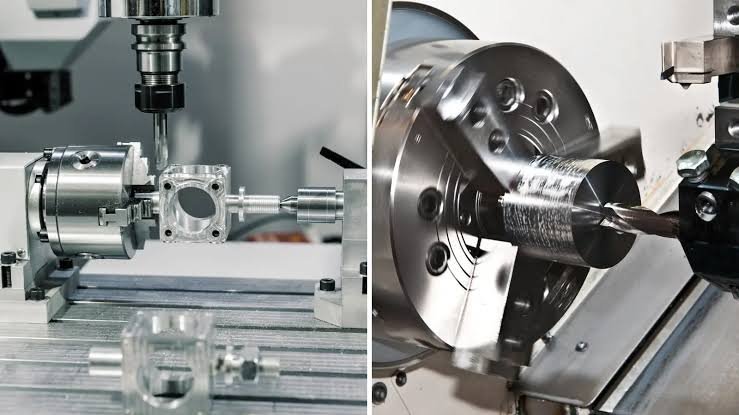
A lathe machine is one of the most widely used machine tools in manufacturing and metalworking. It is designed to rotate a workpiece w hile a cutting tool removes material to create the required shape, size, or finish.
But what is a lathe machine used for? From producing simple cylindrical components to manufacturing complex industrial parts, lathe machines are used in a wide range of applications across different industries.
In this guide, we will explain the main lathe machine uses, the materials it can work with, and why it remains an important part of modern manufacturing.
What Is a Lathe Machine?
A lathe machine is a machine tool that holds and rotates a workpiece around an axis. A cutting tool is then moved against the rotating workpiece to remove material.
Depending on the type of lathe, operators can perform various machining operations, including turning, facing, threading, drilling, boring, and knurling.
Modern CNC lathes machines take this process further by using computer numerical control to automate machining operations and produce consistent, accurate components.
What Is a Lathe Machine Used For?
A lathe machine is primarily used for shaping, cutting, drilling, threading, and finishing rotating workpieces.
Some of the most common uses include:
- Producing cylindrical parts
- Reducing the diameter of a workpiece
- Creating accurate external and internal diameters
- Cutting threads
- Drilling holes
- Creating tapers
- Producing grooves
- Boring internal holes
- Creating smooth surface finishes
- Manufacturing precision components
Because of its versatility, a lathe can be used for both simple workshop jobs and demanding industrial production.
Common Lathe Machine Operations
1. Turning
Turning is one of the most common operations performed on a lathe machine. During turning, the cutting tool moves along the rotating workpiece to remove material and reduce its diameter. This operation is commonly used to manufacture shafts, rods, pins, and other cylindrical components.
2. Facing
Facing is used to create a flat and smooth surface at the end of a workpiece. The cutting tool moves across the end face of the rotating material, removing a small amount of material to achieve the required surface and length.
3. Threading
Lathe machines can be used to produce internal and external threads. Threading is essential for manufacturing components such as threaded shafts, bolts, screws, and other mechanical parts.
4. Drilling
A lathe can also perform drilling operations. A drill bit is held in the tailstock and moved into the rotating workpiece to create a hole. This is useful when the hole needs to be accurately positioned along the center of a round component.
5. Boring
Boring is used to enlarge or improve an existing hole. It can provide greater dimensional accuracy and a better internal surface finish than simply drilling a hole.
6. Knurling
Knurling creates a patterned texture on the surface of a workpiece. It is commonly used on handles, knobs, tool components, and other parts where additional grip is required.
7. Taper Turning
Taper turning produces a conical or gradually changing diameter along a workpiece. This operation is useful for manufacturing machine components that require tapered surfaces.
What Materials Can a Lathe Machine Work With?
The material of a lathe can depend on the machine’s specifications, tooling, spindle power, and cutting parameters.
Common materials include:
- Mild steel
- Stainless steel
- Aluminum
- Brass
- Copper
- Cast iron
- Titanium and other alloys
- Engineering plastics
- Various non-ferrous materials
Selecting the correct cutting tool and machining parameters is important for achieving good results with different materials.
What Industries Use Lathe Machines?
Lathe machines are used across many industries because of their flexibility and ability to produce accurate round components.
Automotive Industry
Lathes are used to manufacture shafts, bushings, pins, spacers, and other automotive components.
Aerospace Industry
Precision lathes can be used to manufacture specialized components where accuracy and repeatability are important.
Engineering and Manufacturing
General engineering workshops use lathes for producing custom components, prototypes, replacement parts, and production components.
Oil and Gas Industry
Lathe machines can be used to manufacture and repair cylindrical components and specialized parts used in oil and gas equipment.
Construction Machinery
Various shafts, pins, bushings, and mechanical components used in construction equipment can be manufactured using lathe machines.
General Metalworking
Machine shops use lathes for repair work, prototyping, maintenance, and production machining.
Manual Lathe vs CNC Lathe
Traditional manual lathes require an operator to control many machining movements. They are useful for repair work, training, custom jobs, and low-volume production.
A CNC lathe, on the other hand, uses programmed computer control to automate the machining process. This can provide improved repeatability, productivity, and consistency, particularly for production environments.
CNC Lathe Advantages
- High machining accuracy
- Consistent production
- Reduced manual intervention
- Faster production for repetitive jobs
- Ability to produce complex profiles
- Better repeatability
- Suitable for batch and mass production
For businesses producing the same components repeatedly, a CNC lathe can be a highly efficient manufacturing solution.
Benefits of Using a Lathe Machine
A lathe machine offers several advantages for manufacturing operations.
Versatility
One machine can perform multiple operations, making it useful for different types of components and machining requirements.
Precision
With the correct machine, tooling, and setup, lathes can produce components to precise dimensional requirements.
Productivity
CNC lathes can automate repetitive operations and reduce the amount of manual work required.
Consistency
Computer-controlled machining helps produce multiple parts with consistent dimensions and quality.
Cost Efficiency
For repetitive production work, CNC turning can reduce machining time and labor requirements, potentially improving overall production efficiency.
How to Choose the Right Lathe Machine
Before purchasing a lathe machine, consider your specific production requirements. Important factors include:
- Workpiece diameter
- Maximum workpiece length
- Spindle speed
- Spindle power
- Machine rigidity
- Required accuracy
- Material being machined
- Production volume
- Tooling requirements
- CNC control system
- Available workspace
Choosing a machine based on your actual applications can help ensure better productivity and long-term value.
Frequently Asked Questions
What is a lathe machine mainly used for?
A lathe machine is mainly used to rotate a workpiece while removing material with a cutting tool. It is commonly used for turning, facing, threading, drilling, boring, knurling, and tapering.
Can a lathe machine cut metal?
Yes. Depending on its specifications and tooling, a lathe can machine materials such as steel, stainless steel, aluminum, brass, cast iron, and other engineering materials.
What is a CNC lathe used for?
A CNC lathe is used for automated and precise machining of rotating components. It is particularly useful for repetitive production and applications requiring consistent dimensions.
What parts can be made on a lathe?
Lathes can produce many cylindrical and rotational components, including shafts, pins, bushings, spacers, threaded components, rollers, and various custom machine parts.
Conclusion
A lathe is primarily used to shape and machine rotating workpieces. It can perform operations such as turning, facing, threading, drilling, boring, knurling, and taper turning. From automotive and aerospace manufacturing to general engineering and metalworking, lathe machines play an important role in producing accurate and reliable components.
If your business needs a machine for precision turning and production, choosing the right lathe based on your material, workpiece size, accuracy, and production requirements is essential.Looking for a reliable CNC lathe for your manufacturing business? CNC Yangsen offers CNC machining solutions designed for different